
The evolution of flagship smartphones and mobile computing power
Beyond simple communication tools, contemporary flagship devices serve as portable workstations. Analyzing the convergence of custom silicon, advanced optics, and neural processing units reveals how pocket-sized hardware now rivals workstation capabilities in raw computational efficiency.

High-sampling touch sensors register inputs with millisecond precision for fluid navigation and immediate haptic feedback.

Computational photography merges multiple exposures to deliver superior dynamic range and optical zoom performance.

Dedicated silicon handles machine learning tasks locally without cloud dependency, enhancing biometric privacy and speed.

Power management systems optimize charging cycles to extend hardware longevity and endurance daily.
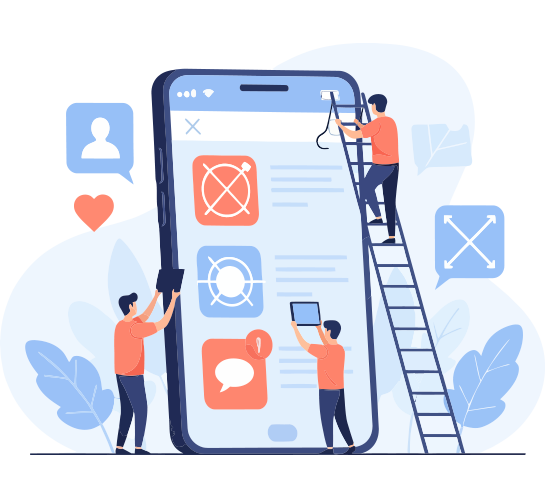
Transforming daily tasks through specialized mobile applications
The app ecosystem turns hardware potential into practical utility. Developers craft intuitive interfaces that manage everything from financial portfolios to IoT automation, leveraging cloud synchronization for seamless transitions between devices.

Productivity suites enable real-time enterprise document collaboration remotely.
Streaming platforms optimize data compression for lossless high-fidelity playback.
Navigation tools integrate GPS satellite data with live traffic metrics.

Coding & architecture
Building the digital infrastructure through coding and development
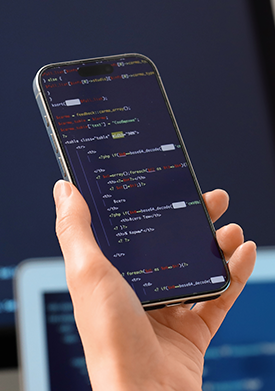
Creating robust mobile software requires mastering specific languages like Swift or Kotlin
Engineers optimize backend code to minimize battery drain while handling thousands of concurrent API requests efficiently to ensure stability.

User Interface design prioritizes accessibility and seamless multi-touch gesture navigation
Designers iterate on wireframes to ensure ergonomic touch targets and visual hierarchies that guide the user experience naturally.


Data privacy
Safeguarding personal data with advanced security protocols

Biometric authentication
Facial mapping sensors create a unique 3D depth model for secure device unlocking.
Data encryption techniques
Files stored locally undergo hardware-level AES encryption to prevent unauthorized extraction.
Network shielding
Virtual Private Networks tunnel traffic through encrypted servers to mask IP addresses and protect sensitive browsing activities.
Threat detection
Real-time scanning algorithms identify and isolate malware code before execution, preserving system integrity.
Performance analysis
Quantifying performance through rigorous testing and benchmarks
Objective analysis separates marketing claims from actual capabilities. Reviewers utilize a battery of synthetic and real-world stress tests to measure thermal throttling, processing stability, and graphic rendering under sustained loads.
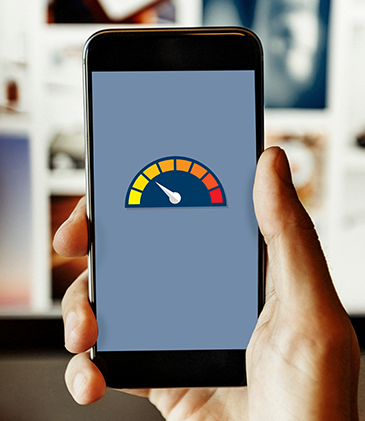
Synthetic processing
Standardized scoring suites
Tests push the CPU and GPU to their absolute limits, calculating multi-core operations per second to rank raw power against competitors.
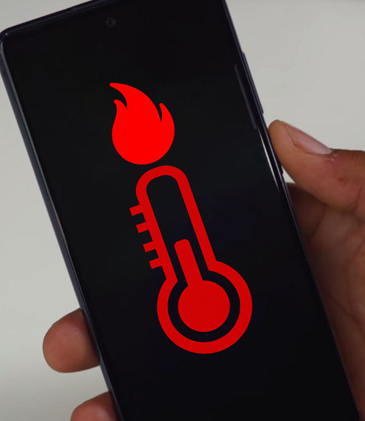
Thermal efficiency
Heat dissipation analysis
Sustained performance depends on how quickly a SoC throttles its clock speed when internal temperatures rise during intensive gaming.
Visual fidelity
Display color accuracy
Spectrometers measure the screen’s ability to reproduce the sRGB and DCI-P3 color spaces, ensuring calibrated true-to-life imagery.
Peripheral integration
Expanding functionality with connected accessories and gadgets
The smartphone acts as a central hub for a constellation of peripheral devices. These add-ons communicate via low-latency Bluetooth protocols to extend the ecosystem and control capabilities of the primary unit.
01

Wearable technology
Smartwatches monitor vital signs using optical heart rate sensors and accelerometers while synchronizing fitness tracking streams instantly.
02

Audio immersion
Wireless TWS earbuds utilize active noise cancellation algorithms to invert ambient sound waves for high-fidelity listening experiences.
Future trends
Strategies for sustainable mobile ecosystem growth
Code architecture
Optimizing application logic
Clean codebases reduce application size and improve launch times on older hardware, extending the usable life of the device.
Screen adaptation
Responsive layout design
Interfaces must adjust content fluidly across foldable screens and varying aspect ratios without breaking visual consistency.
Cloud logic
Server-side integration
Offloading heavy computational AI models to remote servers preserves local battery life and enables complex data processing.